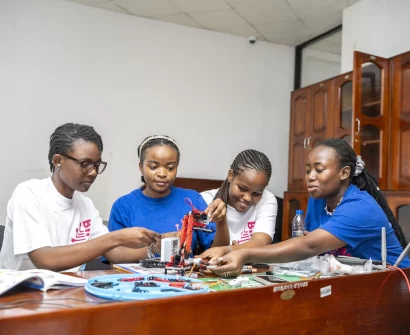
Code That Changes Lives: How Free IT Education Is Transforming Young People Across Africa
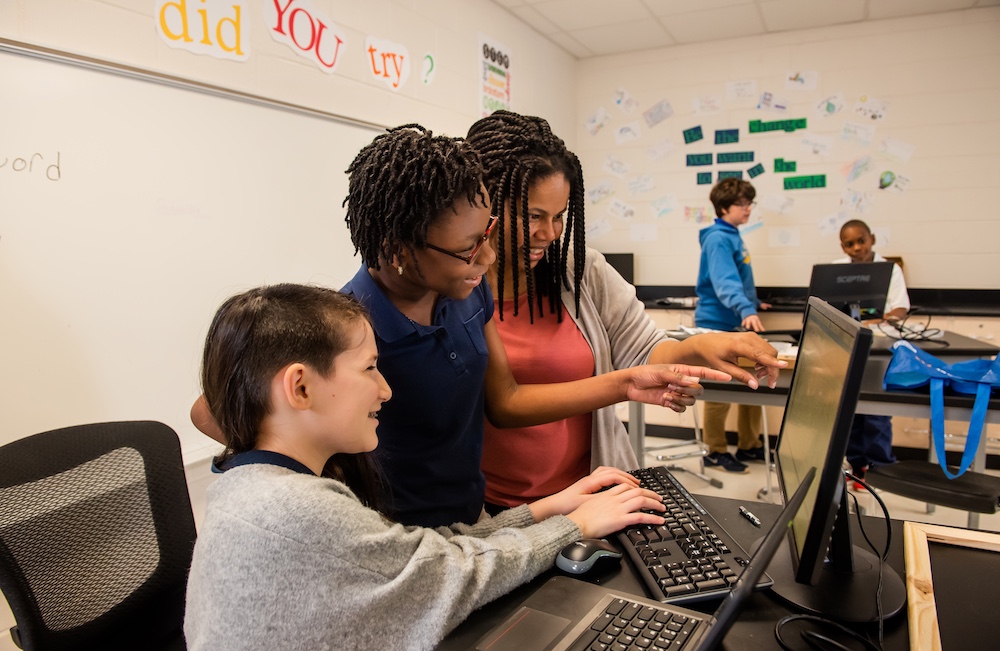
The Most Valuable Natural Resource Is Human Potential
For decades, discussions about Africa’s economic future have focused on natural resources, infrastructure, agriculture, or foreign investment. While these factors undoubtedly shape development, another resource has quietly emerged as the continent’s greatest competitive advantage—its people. Africa is home to one of the youngest populations in the world, with millions of ambitious young individuals entering the workforce every year. Their energy, creativity, and willingness to embrace innovation represent an extraordinary opportunity, but only if they are given access to quality education and meaningful career pathways.
The challenge is clear. In many regions, talented young people face limited access to higher education, outdated curricula, high tuition costs, and labor markets that cannot absorb the growing number of graduates. Traditional education often struggles to keep pace with the rapidly evolving digital economy, leaving students with theoretical knowledge but few practical skills that employers actually demand. As a result, many capable young people remain underemployed despite their potential.
Technology education is changing this reality.
Unlike many traditional professions, software development, data analysis, cybersecurity, cloud computing, and artificial intelligence can be learned from almost anywhere with an internet connection and the right educational support. Coding has become more than a technical skill—it has become a passport to the global digital economy. A student living in Nairobi, Accra, Kigali, or Lagos can contribute to international projects, build digital products, launch startups, or work remotely for companies on the other side of the world without leaving their community.
Free and accessible IT education is therefore doing much more than teaching programming languages. It is reducing unemployment, creating new career opportunities, fostering entrepreneurship, and empowering an entirely new generation of African innovators who are solving local challenges while competing on a global stage.
Why Digital Skills Matter More Than Ever
The world is becoming increasingly digital, and nearly every industry now depends on technology. Businesses require software developers to build applications, hospitals rely on digital systems to improve patient care, banks need cybersecurity specialists to protect financial data, and governments invest in digital infrastructure to deliver public services more efficiently.
This growing demand has created a global shortage of technology professionals.
For young people in Africa, this presents a remarkable opportunity. Rather than competing only within local labor markets, they can acquire skills that are valued internationally and work with organizations across different continents.
Digital skills provide access to careers in areas such as:
- software engineering;
- web development;
- mobile application development;
- cloud computing;
- artificial intelligence;
- data science;
- cybersecurity;
- UI and UX design;
- DevOps engineering;
- product management.
Unlike many traditional career paths, these professions often reward demonstrated ability more than geographic location, making technology one of the most accessible industries for ambitious learners.
The Challenge of Educational Inequality
Despite the growing importance of digital skills, access to quality technology education remains uneven across many regions.
Students often encounter obstacles including:
- high tuition fees;
- limited educational infrastructure;
- shortage of qualified instructors;
- outdated learning materials;
- inadequate internet access;
- lack of practical experience.
These barriers disproportionately affect talented young people from underserved communities, preventing them from reaching their full potential.
Without intervention, educational inequality risks becoming digital inequality, widening the gap between those who can participate in the modern economy and those who cannot.
Why Free IT Education Changes Everything
Removing financial barriers fundamentally changes who can participate in technology.
When education becomes accessible regardless of income, students are able to focus on learning rather than worrying about affordability.
Free technology education creates opportunities for:
- recent school graduates;
- university students;
- unemployed youth;
- career changers;
- women entering technology;
- self-taught learners seeking structure.
Instead of limiting opportunities to those who can afford expensive programs, accessible education democratizes the technology sector.
Talent becomes more important than financial circumstances.
Learning Practical Skills Instead of Memorizing Theory
One reason technology education has become so effective is its emphasis on practical problem-solving.
Employers rarely hire developers based solely on examination results. They want candidates who can build applications, collaborate with teams, solve technical challenges, and contribute to real projects.
Modern coding education therefore focuses on:
Building Real Applications
Students develop websites, mobile apps, APIs, and software solutions rather than completing only theoretical exercises.
Project-Based Learning
Every project strengthens both technical skills and professional portfolios.
Employers value practical experience that demonstrates problem-solving abilities.
Collaborative Development
Students learn how professional software teams operate by working together on shared projects.
This prepares them for modern development environments.
Continuous Feedback
Regular mentorship helps learners improve faster while developing confidence in their abilities.
Technology Creates Jobs Beyond Programming
Many people associate coding education exclusively with becoming a software developer.
In reality, digital education opens doors to numerous careers.
Technology ecosystems require professionals in areas such as:
- quality assurance;
- business analysis;
- technical writing;
- customer success;
- digital marketing;
- cloud administration;
- product ownership;
- project management;
- technical support.
Learning programming often serves as a foundation for multiple career paths rather than a single profession.

Entrepreneurship Begins With Technical Knowledge
Technology education does not simply prepare students to work for existing companies.
It also enables them to create new businesses.
Across Africa, young entrepreneurs are developing solutions tailored to local needs.
Examples include:
- mobile payment platforms;
- agricultural technologies;
- healthcare applications;
- educational platforms;
- logistics systems;
- renewable energy monitoring;
- financial inclusion tools.
These startups solve practical problems while creating employment opportunities for others.
Every successful entrepreneur contributes to a stronger digital economy.
Building Local Solutions for Local Challenges
African developers possess a unique advantage.
They understand the challenges faced by their own communities better than anyone else.
This local perspective drives innovation in areas such as:
Financial Inclusion
Digital payment systems expand access to banking services.
Agriculture
Smart farming tools improve productivity while reducing costs.
Healthcare
Telemedicine platforms connect patients with medical professionals in underserved areas.
Education
Online learning platforms make quality education available beyond major cities.
Public Services
Digital government systems simplify access to essential services.
Technology becomes most powerful when developed by people who understand the communities they serve.
Creating a New Generation of Digital Leaders
Education extends beyond technical knowledge.
Successful technology professionals also develop:
- leadership;
- communication;
- teamwork;
- adaptability;
- critical thinking;
- problem-solving;
- resilience.
These qualities prepare graduates not only to join companies but also to lead them.
Many of today’s technology founders, engineering managers, and innovators began as self-taught developers or students in accessible education programs.
Tomorrow’s leaders are being trained today.
The Global Remote Work Revolution
One of the most significant developments in recent years has been the normalization of remote work.
Companies increasingly recruit talent based on skills rather than physical location.
For African developers, this creates unprecedented opportunities.
Remote careers provide access to:
- international companies;
- higher earning potential;
- flexible work environments;
- global professional networks;
- diverse technical challenges.
Rather than relocating abroad, many professionals now contribute to international teams while remaining within their own communities.
This allows knowledge, experience, and income to strengthen local economies.
The Importance of Community in Learning
Learning to code is rarely a journey completed alone.
Communities play a critical role in student success.
Strong learning ecosystems provide:
- peer support;
- mentorship;
- networking opportunities;
- collaborative projects;
- career advice;
- technical discussions.
Students who learn within supportive communities are often more motivated and more likely to complete their educational journeys.
Technology education is ultimately about people, not just programming languages.
Bridging Africa’s Educational Gap Through Accessible Learning
Expanding access to quality technology education requires more than simply publishing online lessons. Learners need structured pathways, practical projects, experienced mentors, and a supportive community that helps them progress from beginner concepts to professional-level skills. An educational platform designed around these principles becomes far more than a collection of courses—it becomes an ecosystem where students can build sustainable careers.
By offering free and accessible programs in software development, web technologies, data science, cloud computing, and other high-demand disciplines, modern learning platforms help reduce the educational gap that still exists across many regions of Africa. Interactive lessons, project-based assignments, mentorship opportunities, and career-focused learning ensure that students gain practical experience rather than theoretical knowledge alone. This approach prepares graduates for real-world challenges while giving them the confidence to compete in the global technology industry.
Equally important, accessible education empowers individuals regardless of their financial background. When high-quality courses are available without prohibitive tuition fees, talented learners can focus on developing their skills instead of worrying about affordability. Every student who completes a course, builds a portfolio, or secures their first technology job becomes further evidence that expanding access to education is one of the most effective investments in Africa’s future.
Why Investing in Young Talent Benefits Entire Economies
When one student learns to code, the benefits extend far beyond that individual.
Technology professionals contribute to society by:
- creating businesses;
- generating employment;
- paying taxes;
- mentoring future developers;
- solving local challenges;
- attracting international investment.
As the number of skilled professionals grows, entire technology ecosystems become stronger.
Education therefore produces long-term economic impact that reaches communities, industries, and national economies.
The Future of Africa Will Be Built by Its Developers
Africa’s technology sector continues expanding at an extraordinary pace.
Growing internet access, increasing smartphone adoption, expanding startup ecosystems, and international investment are creating unprecedented demand for skilled professionals.
Future opportunities will include:
- artificial intelligence;
- blockchain;
- cybersecurity;
- cloud infrastructure;
- fintech;
- green technology;
- robotics;
- digital healthcare.
Young people equipped with modern technical skills will help shape these industries rather than simply participate in them.
Conclusion
Free IT education is transforming far more than individual careers—it is reshaping the future of entire communities across Africa. By removing financial barriers and providing access to practical, industry-relevant skills, technology education enables talented young people to participate in the global digital economy regardless of where they were born or the resources available to them. Every new developer, data analyst, designer, or technology entrepreneur represents another step toward a more innovative, resilient, and inclusive future.
The impact extends well beyond employment. As graduates build startups, contribute to international companies, develop local digital solutions, and mentor the next generation of learners, they create a cycle of opportunity that strengthens both local communities and national economies. Technology becomes not only a pathway to personal success but also a catalyst for broader social and economic transformation.
The future of Africa will not be defined solely by its natural resources or infrastructure projects. It will increasingly be shaped by the creativity, determination, and technical expertise of its people. By investing in accessible education today, we are investing in a generation capable of solving complex challenges, building world-class innovations, and demonstrating that talent—when given the opportunity to grow—has the power to change lives, communities, and entire nations.