Leapfrogging Innovation: How African FinTech and AgriTech Startups Are Redefining the Future of Technology

Innovation Does Not Always Follow the Traditional Path
For many years, technological progress was viewed as a gradual process. Countries were expected to build infrastructure step by step, moving through decades of industrial development before embracing advanced digital technologies. However, Africa has challenged this traditional model. Instead of slowly adopting legacy systems, many African nations have skipped entire generations of technology and moved directly toward modern digital solutions. This phenomenon, often described as “leapfrogging,” has become one of the most fascinating stories in global innovation.
Rather than investing heavily in outdated banking infrastructure, millions of people embraced mobile payments. Instead of relying exclusively on conventional agricultural methods, farmers began adopting AI-powered analytics, satellite monitoring, and smartphone-based advisory services. Digital identity platforms, online education, telemedicine, renewable energy systems, and cloud-based financial services have expanded rapidly because they solve real problems in environments where traditional infrastructure has often been limited.
This ability to innovate differently has transformed Africa into one of the world’s most exciting technology ecosystems. Entrepreneurs are not simply copying products developed elsewhere—they are creating solutions specifically designed for local challenges. Their innovations are increasingly attracting international investment, inspiring global companies, and demonstrating that necessity remains one of the strongest drivers of technological creativity.
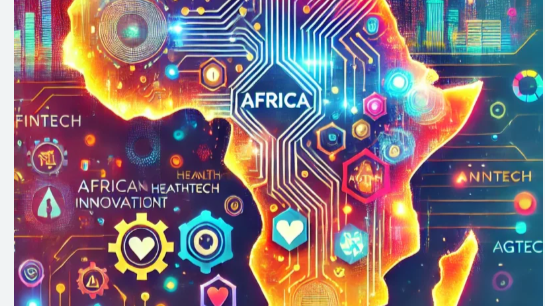
Among the sectors leading this transformation, FinTech and AgriTech stand out as powerful examples of how leapfrogging enables entire industries to evolve faster than many expected.
Understanding the Leapfrogging Phenomenon
Leapfrogging refers to the process of bypassing outdated technologies and adopting more advanced solutions directly.
Instead of following the same technological evolution experienced by developed economies over several decades, emerging markets often implement modern digital systems immediately.
Examples include:
- mobile banking instead of traditional branch networks;
- cloud services instead of local server infrastructure;
- smartphone applications instead of desktop-first software;
- digital identity verification instead of paper documentation;
- renewable microgrids instead of centralized electricity networks.
This approach reduces costs while accelerating access to services that were previously unavailable.
Rather than catching up with the rest of the world, African innovators are increasingly helping define what the future of technology looks like.

Why Africa Has Become an Innovation Laboratory
Several unique conditions have encouraged rapid technological innovation across the continent.
These include:
- a young and digitally connected population;
- growing smartphone adoption;
- expanding internet accessibility;
- entrepreneurial culture;
- increasing investment in startups;
- demand for practical, affordable solutions.
Because many traditional systems were either unavailable or insufficient, entrepreneurs had the opportunity to build entirely new digital alternatives without being constrained by outdated infrastructure.
Innovation became a necessity rather than a luxury.
FinTech: Transforming Financial Inclusion
One of the most remarkable success stories in Africa’s technology ecosystem is financial technology.
Millions of individuals previously lacked access to traditional banking services due to geographic distance, documentation requirements, or limited financial infrastructure.
FinTech companies changed this landscape by bringing financial services directly to mobile devices.
Today, digital financial platforms provide access to:
- mobile payments;
- digital wallets;
- peer-to-peer transfers;
- savings accounts;
- microloans;
- insurance products;
- merchant payment solutions.
Financial inclusion is no longer dependent on physical bank branches.
Instead, technology enables millions of people to participate in the digital economy using devices they already own.
Mobile Payments Changed Everyday Commerce
Mobile payment systems have transformed how businesses and consumers interact.
Cash transactions are increasingly being replaced by secure digital alternatives that simplify everyday financial activities.
Benefits include:
- faster transactions;
- improved security;
- reduced operating costs;
- easier financial tracking;
- broader access to digital services.
Small businesses, street vendors, freelancers, and entrepreneurs all benefit from payment systems that operate efficiently without requiring expensive banking infrastructure.
AgriTech Is Modernizing Agriculture
Agriculture remains one of Africa’s most important economic sectors.
However, farmers often face significant challenges including unpredictable weather, limited market information, pests, water shortages, and inefficient resource management.
AgriTech startups are addressing these issues through technology-driven solutions.
Modern agricultural platforms help farmers:
- monitor crops remotely;
- predict weather conditions;
- optimize irrigation;
- detect plant diseases;
- access market prices;
- improve supply chain efficiency.
Technology allows farmers to make informed decisions based on real-time data rather than guesswork.
Artificial Intelligence Is Transforming Farming
Artificial intelligence is becoming an increasingly valuable tool for agricultural innovation.
Machine learning models analyze vast amounts of information to support better farming decisions.
AI-powered applications assist with:
Crop Monitoring
Computer vision detects signs of disease before visible damage occurs.
Early intervention improves harvest quality.
Yield Prediction
AI models estimate future production based on historical and environmental data.
This supports better financial planning.
Precision Agriculture
Smart recommendations optimize fertilizer usage, irrigation schedules, and planting strategies.
Resources are used more efficiently while reducing environmental impact.
Market Forecasting
Predictive analytics help farmers identify favorable selling opportunities.
Better market timing increases profitability.
Technology Solves Local Problems
The strongest African startups focus on practical challenges that directly affect everyday life.
Instead of building technology for technology’s sake, entrepreneurs prioritize meaningful impact.
Examples include:
- affordable digital healthcare;
- educational platforms;
- clean energy solutions;
- logistics optimization;
- agricultural marketplaces;
- digital lending services.
This problem-first approach produces products with clear value for users while creating scalable business opportunities.
Startups Are Attracting Global Investment
International investors increasingly recognize Africa as one of the world’s fastest-growing innovation ecosystems.
Investment continues expanding across multiple sectors because entrepreneurs are building solutions with strong growth potential.
Investors are particularly interested in startups focused on:
- financial inclusion;
- agricultural technology;
- climate resilience;
- digital healthcare;
- enterprise software;
- artificial intelligence.
Capital not only supports business growth but also strengthens local innovation ecosystems by creating jobs and encouraging knowledge sharing.
Building Products for Mobile-First Users
Unlike many developed markets that evolved from desktop computing to smartphones, many African consumers experienced the internet primarily through mobile devices.
This has shaped product design in important ways.
Successful applications prioritize:
- simple user interfaces;
- low data consumption;
- offline functionality;
- multilingual accessibility;
- lightweight performance.
Designing for mobile-first environments often results in products that are more efficient and user-friendly for global audiences as well.
Innovation Requires Skilled Developers
Behind every successful startup are talented engineers, designers, product managers, and data specialists.
Technology ecosystems can only continue growing when educational systems produce professionals with practical skills.
Developers working in FinTech and AgriTech require knowledge in areas such as:
- software engineering;
- cloud computing;
- artificial intelligence;
- cybersecurity;
- mobile application development;
- API integration;
- data analytics.
Continuous education ensures that innovation keeps pace with rapidly evolving technologies.
Learning to Build the Next Generation of Digital Products
As Africa’s technology ecosystem expands, education plays a central role in preparing the professionals who will design tomorrow’s innovations. Building successful FinTech platforms, AI-powered agricultural tools, and scalable digital products requires more than programming knowledge alone. Developers must understand cloud infrastructure, data management, artificial intelligence, cybersecurity, product architecture, and the specific challenges these technologies are intended to solve.
Modern educational platforms bridge this gap by offering practical learning paths focused on real-world product development. Through project-based courses, learners gain hands-on experience designing financial applications, developing intelligent automation systems, integrating APIs, and applying machine learning to practical business problems. Rather than studying technology in isolation, students learn how to build solutions that address genuine market needs.
By combining technical education with industry-focused learning, mentorship, and collaborative projects, these platforms prepare future engineers to contribute immediately to Africa’s growing startup ecosystem. Graduates leave with both the technical foundation and the practical experience needed to create innovative products capable of competing on a global scale while solving local challenges.
Collaboration Is Driving Innovation
Technology ecosystems thrive through collaboration.
Successful innovation depends on partnerships between:
- startups;
- universities;
- investors;
- governments;
- technology hubs;
- educational institutions.
Knowledge sharing accelerates learning while encouraging sustainable long-term growth.
Strong communities often produce stronger products.
The Future of Leapfrogging
The next phase of leapfrogging will likely extend beyond mobile payments and digital agriculture.
Emerging technologies expected to shape Africa’s future include:
- artificial intelligence;
- blockchain;
- robotics;
- autonomous systems;
- climate technology;
- smart manufacturing;
- advanced healthcare solutions.
As digital infrastructure continues improving, African innovators will increasingly influence global technology trends rather than simply adopting them.
Conclusion
Africa’s rise as a center of innovation demonstrates that technological progress does not always follow traditional paths. Through the power of leapfrogging, entrepreneurs have bypassed outdated systems and embraced modern digital solutions that address real challenges with remarkable speed and creativity. In sectors such as FinTech and AgriTech, this approach has expanded financial inclusion, improved agricultural productivity, and created entirely new opportunities for economic growth across the continent.
Behind every successful innovation is a growing community of skilled developers, engineers, designers, and entrepreneurs who combine technical expertise with a deep understanding of local needs. Their ability to build practical, scalable solutions has attracted international investment while proving that Africa is not simply adopting global technologies—it is actively shaping the future of digital innovation.
As education, artificial intelligence, cloud computing, and startup ecosystems continue to evolve together, the continent is well positioned to lead the next generation of technological breakthroughs. By investing in practical skills, collaborative learning, and product-focused innovation, Africa is creating an environment where ambitious ideas can grow into solutions that benefit not only local communities but the global technology landscape as a whole.