From an Idea to the First Line of Code: Inspiring Stories of Young Developers Building Africa’s Future

Every Great Developer Starts as a Beginner
Every successful software engineer, startup founder, or technology leader shares one thing in common—they all started with a single decision to learn. Before writing production-ready applications, contributing to open-source projects, or leading engineering teams, they faced the same uncertainties that every beginner experiences today. They searched for answers online, struggled to understand programming concepts, fixed countless errors, and gradually transformed curiosity into practical skills.
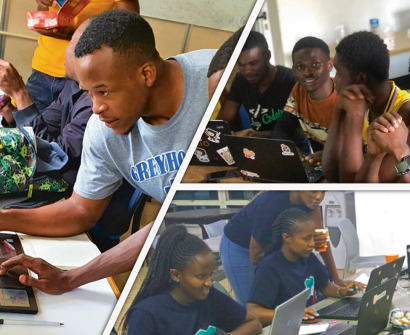
Across Africa, thousands of young people are making this journey every day. Some begin learning to code after finishing school, while others discover programming during university or decide to change careers after working in completely different industries. Their backgrounds may vary, but they are united by a belief that technology can create opportunities not only for personal growth but also for improving the lives of their families and communities.
What makes these stories especially inspiring is that many of these developers begin with limited resources. They often learn using affordable laptops, public internet connections, or shared devices, yet their determination enables them to compete with peers anywhere in the world. Through consistent learning, mentorship, and practical experience, they develop applications that solve real problems, participate in international hackathons, contribute to open-source projects, and secure positions at innovative technology companies.
Their success demonstrates an important truth: becoming a software developer is not about having a perfect starting point. It is about maintaining the determination to keep learning, improving, and building one project after another.
Every Journey Begins With Curiosity
Few developers write their first line of code because they already know exactly what career they want.
More often, curiosity provides the first step.
Many future engineers begin by asking simple questions:
- How are websites built?
- How do mobile applications work?
- What makes games interactive?
- Can I create something like this myself?
Those questions often lead to online tutorials, introductory programming courses, and eventually to the first successful project.
Curiosity becomes the foundation for lifelong learning.

The First Challenges Are Always the Hardest
Learning to program can feel overwhelming.
New developers encounter unfamiliar concepts such as:
- variables;
- functions;
- loops;
- databases;
- APIs;
- debugging;
- version control.
Error messages seem confusing, projects fail unexpectedly, and progress may appear slow.
However, every experienced software engineer has faced exactly the same obstacles.
The difference between those who succeed and those who give up is rarely intelligence—it is persistence.
Every solved problem builds confidence for the next challenge.
Learning by Building
Reading programming books provides valuable knowledge, but real understanding develops through practice.
Many successful developers improve by creating increasingly ambitious projects.
Examples include:
- personal websites;
- calculator applications;
- to-do list apps;
- weather dashboards;
- online stores;
- educational platforms;
- mobile applications.
Each completed project teaches new technical concepts while strengthening problem-solving skills.
Small projects eventually lead to much larger achievements.
From Student Projects to Real Products
Many young developers begin by solving problems they personally experience.
Some create applications for:
- managing school assignments;
- organizing community events;
- supporting local businesses;
- improving healthcare access;
- helping farmers;
- simplifying digital payments.
What begins as a learning exercise often evolves into a product with genuine value.
Several successful African startups started exactly this way—with students solving everyday challenges using technology.

The Importance of Mentorship
Behind many successful developers stands someone who encouraged them during difficult moments.
Mentors provide more than technical advice.
They also help students:
- build confidence;
- improve learning strategies;
- prepare for interviews;
- review projects;
- avoid common mistakes;
- explore career opportunities.
A mentor’s guidance often shortens the learning journey by helping beginners focus on what truly matters.
Learning becomes less intimidating when experienced professionals share their knowledge.
Collaboration Accelerates Growth
Programming is often imagined as a solitary activity.
In reality, modern software development depends on teamwork.
Young developers grow faster when they:
- participate in coding communities;
- contribute to group projects;
- review one another’s code;
- attend developer meetups;
- join hackathons;
- collaborate through Git.
Working with others introduces new ideas while improving communication and technical skills.
The best developers never stop learning from their peers.
Open Source Opens Global Opportunities
Open-source software has transformed the technology industry.
Developers from different countries collaborate on the same projects regardless of geography.
Contributing to open-source initiatives allows young engineers to:
- improve coding skills;
- learn professional workflows;
- receive feedback from experienced developers;
- build public portfolios;
- connect with international communities.
Many employers value meaningful open-source contributions because they demonstrate initiative and real-world collaboration.
Confidence Grows With Every Success
The first completed application often changes how students see themselves.
Instead of wondering whether they can become developers, they begin asking what they should build next.
Every milestone strengthens motivation:
- completing a programming course;
- fixing a difficult bug;
- launching a website;
- publishing a mobile app;
- contributing to GitHub;
- passing a technical interview.
Progress rarely happens overnight.
It is built through hundreds of small victories accumulated over time.
Learning Platforms Turn Potential Into Professional Skills
Behind every inspiring success story is a learning journey built on consistent practice, structured guidance, and access to the right educational resources. Modern technology education gives aspiring developers far more than programming tutorials—it provides a complete environment where learners can build practical skills through real projects, collaborate with peers, and gain experience that reflects the expectations of today’s technology industry.
Project-based learning allows students to create applications from the very beginning of their education. Instead of focusing only on theoretical concepts, learners develop portfolios that showcase websites, mobile applications, APIs, and other practical solutions. Each completed project strengthens both technical confidence and problem-solving abilities while preparing students for professional software development.
Equally valuable is the opportunity to learn alongside experienced mentors and become part of an active community. Educational platforms that offer mentorship, technical guidance, collaborative projects, and career support help students transform their knowledge into employment opportunities. Student showcases, graduation projects, and success stories demonstrate what is possible when determination is supported by quality education and a community that believes in every learner’s potential.
Success Is Measured Differently for Everyone
Not every developer dreams of founding a billion-dollar startup.
Success can take many forms.
Some graduates aspire to:
- join international technology companies;
- become freelance developers;
- build local businesses;
- teach programming;
- contribute to open-source software;
- develop social impact solutions.
Every career path contributes to strengthening Africa’s growing technology ecosystem.
There is no single definition of success.

Technology Creates Opportunities Beyond Employment
Programming is more than a profession.
It is a tool for solving problems.
Developers can create products that:
- improve education;
- strengthen healthcare;
- support agriculture;
- expand financial inclusion;
- protect the environment;
- connect communities.
Technology enables young innovators to create meaningful impact while building sustainable careers.
The Future Belongs to Builders
Africa’s technology ecosystem continues growing rapidly.
Increasing investment, expanding startup communities, improved internet access, and rising demand for digital solutions are creating unprecedented opportunities.
The next generation of innovators will likely build products using:
- artificial intelligence;
- cloud computing;
- cybersecurity;
- blockchain;
- data science;
- robotics.
The developers beginning their learning journey today may become tomorrow’s founders, researchers, engineering leaders, and innovators.
Conclusion
Every successful developer has a story that begins with curiosity, determination, and the courage to take the first step. Across Africa, thousands of young people are proving that talent can flourish regardless of background when it is supported by quality education, practical experience, and a willingness to keep learning. Their journeys from complete beginners to professional software engineers, startup founders, and innovators demonstrate that consistent effort often matters far more than having perfect conditions from the start.
These stories also highlight the importance of learning through real projects, collaborating with others, seeking mentorship, and embracing every challenge as an opportunity to grow. Each application built, every bug solved, and every new skill mastered becomes part of a larger journey toward professional success and meaningful impact. Technology is not simply creating careers—it is empowering a new generation to solve real problems and contribute to the development of their communities.
As Africa’s digital economy continues to expand, today’s students will become tomorrow’s technology leaders. With access to practical education, supportive learning communities, and opportunities to showcase their achievements, young developers are building far more than software—they are building the future of innovation across the continent.